Chilliwack winters don't look extreme on paper. We rarely see deep cold for long stretches, and the snow usually comes and goes within a week. But the wet, damp air that hangs over the Fraser Valley from November through March is harder on a furnace than dry cold ever is. After 20+ years working in this region, here is what we have learned about why wet winters wear furnaces down, and what you can do about it.
Why damp air is a furnace problem
Furnaces are designed to handle dry, cold air. When the indoor air is dry, combustion goes cleanly, exhaust gases move smoothly out the vent pipe, and condensation behaves predictably.
In a wet Fraser Valley winter, none of that is true. The humid air coming into your furnace from your home, especially if you do laundry indoors, cook a lot, or have an unsealed crawlspace, carries a lot of water vapor. That moisture changes how the furnace runs.
Three things go wrong. First, the secondary heat exchanger in modern high-efficiency furnaces is supposed to condense water out of exhaust gases, and that water is supposed to drain out. In humid environments, too much condensation can pool in the wrong places. Second, the flame sensor and igniter get coated in residue faster, which trips the furnace off. Third, the pressure switch, which makes sure the venting is clear, can get clogged with condensation in the small tubes that connect it.
What you should do yourself
There are three maintenance tasks that any Chilliwack homeowner can handle without calling a tech.
First, change your filter monthly during winter. We say monthly because in our climate, the furnace runs much more than the manufacturer's "every 3 months" guideline assumes. A clean filter means the blower works less hard, the heat exchanger stays cooler, and the system pulls less moisture and dust into the inner workings.
Second, keep the area around your furnace dry and clear. Don't store wet jackets, mops, or damp laundry within a few feet of the furnace. A furnace pulls air from the room it is in, and humid air is the enemy. If the furnace is in a basement that smells musty, address the basement first.
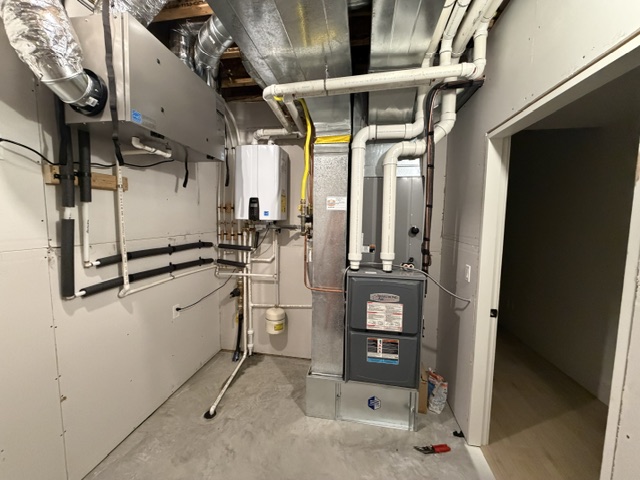
Third, check the condensate drain line monthly if you have a high-efficiency unit. There is a small white PVC pipe running from the furnace to a floor drain or laundry sink. Pour a cup of warm water down it once a month to keep it clear. If it backs up, you will start seeing water around the furnace and the unit may shut off.
What we check on an annual visit
When we do a yearly furnace tune-up in Chilliwack, here is the work that gets done. It takes about an hour for a typical residential furnace.
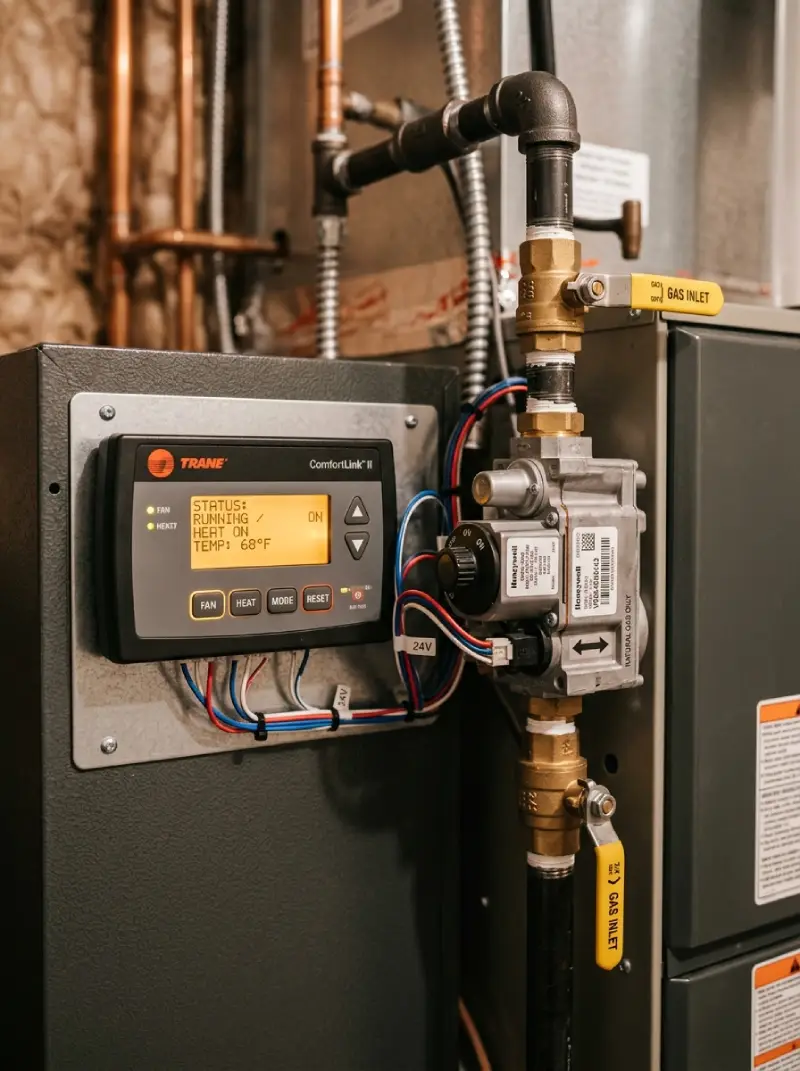
We test the gas pressure to make sure the burners are getting the right amount of fuel. Wrong gas pressure burns dirty, leaves residue, and wastes fuel.
We clean the flame sensor. This is a thin rod that confirms the burner is lit. In humid winters, it builds up a coating that makes the furnace see a phantom flameout and shut down. A 60-second cleaning prevents most of the no-heat calls we get in February.
We inspect the heat exchanger for cracks, rust, or pinhole leaks. This is the single most important safety check. A cracked heat exchanger can leak carbon monoxide into your home. We use a borescope camera so we can actually see the metal, not just guess.
We test the limit switch and the pressure switch. Both of these are safety controls that shut the furnace off if something goes wrong. We confirm they trip at the right values and reset properly.
We clean the blower wheel and motor housing. A blower wheel that is caked in dust moves less air, which makes the furnace work harder and run longer.
We check the venting. Both intake and exhaust pipes. Birds, wasps, leaves, and ice can block them in our climate.
We check carbon monoxide levels in the exhaust and around the furnace. This catches problems before they become emergencies.
The warning signs
Most furnace breakdowns are not sudden. They give you days or weeks of warning. The most common signs we see in Chilliwack homes are these.
A clicking sound followed by no heat. That is usually the igniter trying to fire and failing, or the flame sensor getting dirty.
A burning smell when the furnace first runs in the fall. If the smell goes away after the first cycle, it is just dust burning off. If it persists, call us.
Yellow flame instead of blue. The flame inside a healthy furnace is sharp and blue. A yellow flame means incomplete combustion, which produces carbon monoxide. Don't ignore this.
Short, frequent cycling. If your furnace turns on and off every few minutes, something is wrong. Could be a dirty filter, a failing limit switch, or thermostat issues.
Higher than normal gas bills with no change in temperature settings. A struggling furnace pulls more gas to do the same amount of work.
Book before September
Furnaces fail at the worst possible time. The first week of cold weather. Every HVAC company in Chilliwack gets slammed with no-heat calls in November and December, and even with our extended hours we sometimes cannot get to everyone the same day.
The simple fix is to book your tune-up in August or September, before the rush. We are rarely booked solid in those months, the visit is at your convenience, and we catch issues before they become winter emergencies. Annual tune-ups also keep your manufacturer warranty valid on most newer furnaces.
Call (604) 655-6929 to book. We service every furnace brand and we will come to your home anywhere in Chilliwack, Sardis, Vedder, Promontory, Yarrow, Rosedale, or the Chilliwack River Valley.