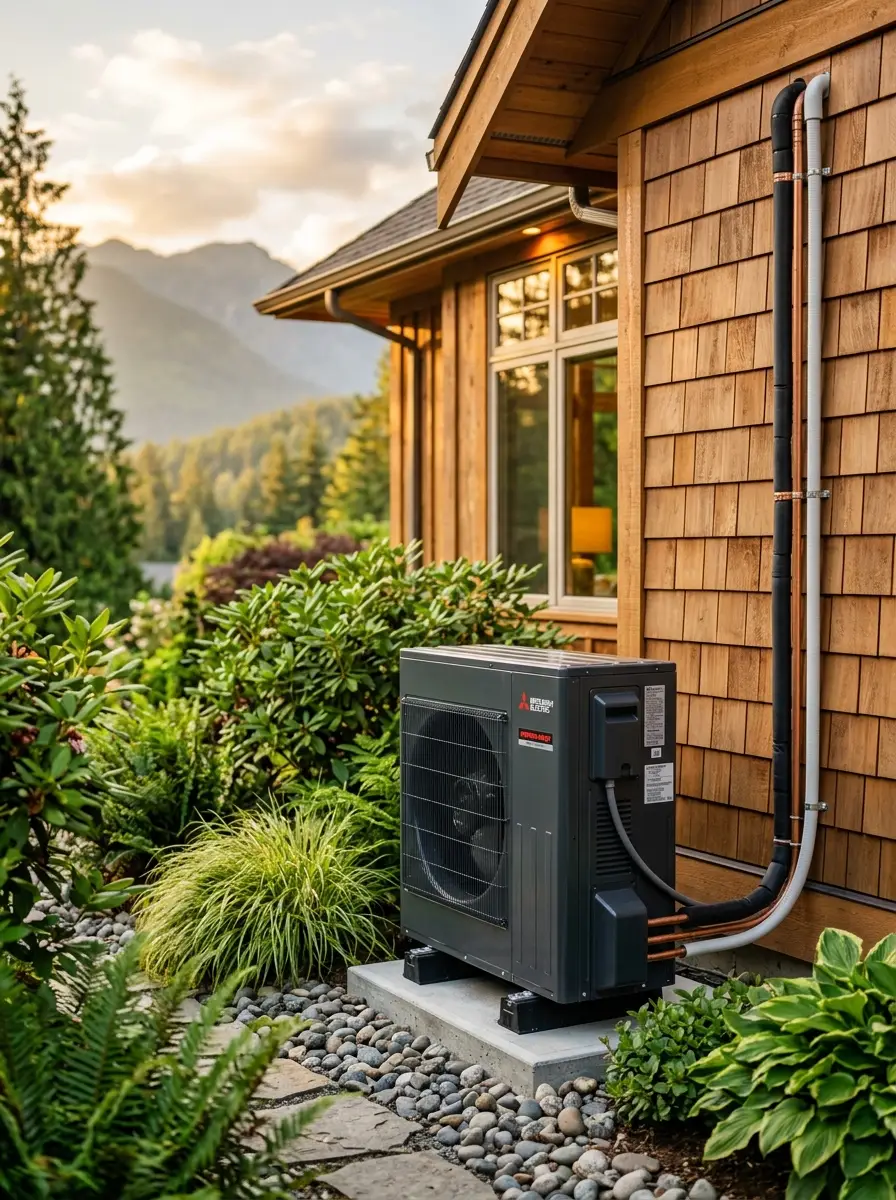
If you're a Fraser Valley homeowner looking to replace your heating system, you've probably heard a lot of noise about heat pumps lately. CleanBC rebates, energy savings, year-round comfort, it sounds almost too good to be true. But does a heat pump actually make sense for YOUR home, or is a high-efficiency furnace still the smarter choice?
The honest answer? It depends. And anyone who tells you otherwise without looking at your specific situation is selling you something. As a team that installs both heat pumps and furnaces across the Fraser Valley every week, here's our straightforward take on the pros, cons, and real-world costs of each option, written by the licensed technicians who actually do the work.
How Heat Pumps Work
A heat pump doesn't generate heat the way a furnace does, instead, it moves thermal energy from one place to another. Even when the air outside feels bitterly cold, there's still thermal energy available, and a heat pump extracts that energy and transfers it into your home using a refrigerant cycle. Think of it like a refrigerator running in reverse.
In summer, the process flips. The heat pump pulls heat out of your home and dumps it outside, functioning as a highly efficient air conditioner. This dual capability is one of the biggest selling points, one system handles both heating and cooling, eliminating the need for a separate AC unit.
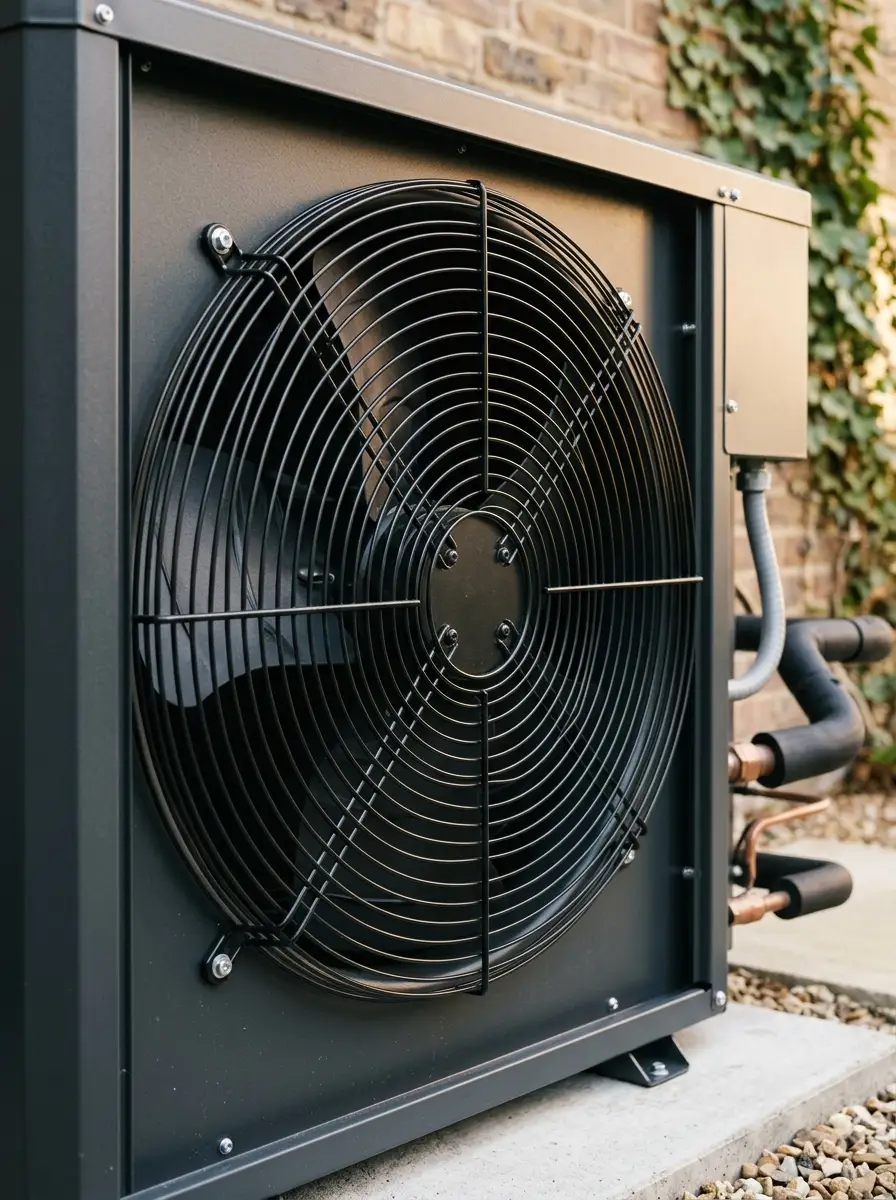
Modern cold-climate heat pumps are engineered to operate efficiently down to -25°C and below, which is well beyond anything the Fraser Valley typically experiences. Our coldest winter nights rarely dip below -10°C, making this region one of the best climates in Canada for heat pump performance. The old myth that heat pumps are "only for mild climates" simply doesn't apply to today's technology.
The efficiency numbers are impressive. For every unit of electricity a heat pump consumes, it typically delivers 2 to 4 units of heating energy. This ratio, known as the Coefficient of Performance (COP), means heat pumps are 200-400% efficient, compared to even the best gas furnace, which maxes out at around 98% efficiency.
How Furnaces Work
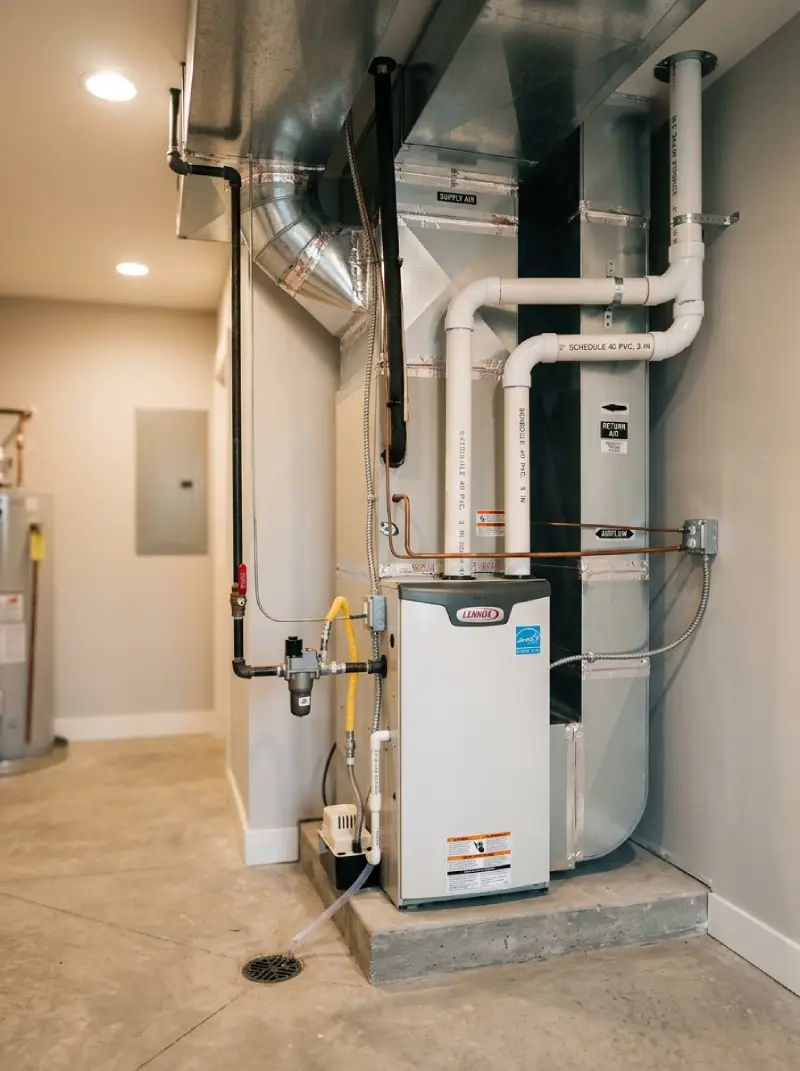
A natural gas furnace burns gas to create heat, which is then pushed through your home's ductwork by a blower fan. It's a straightforward, proven technology that's been reliably heating Canadian homes for decades. Modern high-efficiency condensing furnaces convert 96-98% of the gas they burn into usable heat, a massive improvement over the 60-80% efficiency of older models.
Furnaces excel at one thing above all else, producing high-temperature heat quickly. When the temperature drops suddenly and you need your home warm fast, a gas furnace delivers. This can be particularly important in older, poorly insulated homes where maintaining temperature is an ongoing challenge.
The trade-off is that furnaces only provide heating. If you want air conditioning during Fraser Valley's increasingly hot summers, you'll need to install a separate AC unit, adding to both your upfront cost and the number of systems you need to maintain. That said, for homeowners who already have central AC, replacing just the furnace can be the most cost-effective path.
The Real Cost Comparison
Let's talk numbers, because this is where the decision often gets made.
A new high-efficiency gas furnace typically costs between $4,000 and $8,000 fully installed in the Fraser Valley, depending on the brand, efficiency rating, and complexity of the installation. If you need to add central AC on top of that, budget another $4,000 to $8,000, bringing your total heating and cooling investment to potentially $8,000 to $16,000.
A heat pump system ranges from $5,000 to $15,000 depending on the type (ductless mini-split vs. ducted central system) and the size of your home. At first glance, that looks comparable or even more expensive than a furnace.
But here's where the math changes dramatically. Heat pumps are eligible for significant CleanBC and FortisBC rebates that can slash your out-of-pocket cost. Qualifying homeowners may access up to $24,500 in combined provincial and federal rebates on heat pump installations. After incentives, a heat pump system that costs $12,000 before rebates might only cost you $4,000 to $6,000 out of pocket, potentially less than a furnace.
On the operating cost side, heat pump owners in the Fraser Valley typically see 30-50% lower annual heating costs compared to natural gas furnaces. Over a 15-20 year system lifespan, those savings add up to thousands of dollars. However, the exact numbers depend on your electricity rates, gas rates, home size, insulation quality, and how aggressively you heat your home.
Climate Considerations for the Fraser Valley
The Fraser Valley's climate is actually ideal for heat pumps. Our winters are wet and cool but rarely extreme, average winter lows hover around 0°C to -5°C, well within the comfort zone of any modern cold-climate heat pump. Meanwhile, our summers are getting hotter, with more frequent heat waves pushing into the mid-30s. A heat pump handles both seasons from a single system.
That said, there are specific Fraser Valley scenarios where a furnace might still make more sense. Homes in the Chilliwack River Valley or higher-elevation properties near Hope can experience colder temperatures than the valley floor. Older homes with poor insulation and leaky building envelopes may struggle to maintain comfort with a heat pump alone during cold snaps. And if you're on a well or septic system with limited electrical capacity, adding a heat pump may require an electrical panel upgrade.
The Dual Fuel Option, Best of Both Worlds
Can't decide? You don't have to. A dual fuel system pairs a heat pump with a gas furnace, using the heat pump as the primary heating source for the majority of the year and automatically switching to the furnace only during the coldest periods when the heat pump's efficiency drops.
This gives you the energy savings of a heat pump (which handles 80-90% of your annual heating) with the backup security and high-temperature output of gas heat for those rare cold snaps. It's the belt-and-suspenders approach, and it's become one of our most popular installations in the Fraser Valley.
Best of all, dual fuel systems are eligible for up to $5,000 in FortisBC rebates, making them a financially attractive middle ground for homeowners who want the benefits of both technologies.
Maintenance and Lifespan
Both systems require annual maintenance to run efficiently and safely. Gas furnaces need yearly inspections of the heat exchanger, burners, gas connections, and safety controls. Heat pumps need annual coil cleaning, refrigerant level checks, and filter changes.
In terms of lifespan, a well-maintained gas furnace typically lasts 15-20 years. Heat pumps generally last 15-20 years as well, though the outdoor compressor is exposed to weather and may need attention sooner in coastal BC's wet climate. We offer maintenance plans for both systems that keep your equipment running at peak performance and catch small issues before they become expensive repairs.
Our Honest Recommendation
For most Fraser Valley homes in 2026, a heat pump is the better long-term investment, especially with current rebate programs making them more affordable than ever. The combination of year-round comfort, lower operating costs, air conditioning included, and substantial rebate eligibility makes it hard to beat.
But a heat pump isn't the right choice for everyone. If your home has significant insulation issues that need to be addressed first, if you're on a tight budget without rebate eligibility, if your electrical panel can't support the additional load, or if you simply prefer the feel and reliability of gas heat, a modern high-efficiency furnace is still an excellent choice that will serve you well for decades.
The best advice we can give? Don't guess. Call us at (604) 655-6929 for a free, no-obligation consultation. We'll visit your home, assess your current system, evaluate your insulation and ductwork, check your rebate eligibility, and give you an honest side-by-side comparison with real numbers for YOUR specific situation. No pressure, no upselling, just the information you need to make the right decision for your family and your budget.